Energy bills keep climbing Most of us feel it every month The good news is that a few small gadgets can help.
Smart home energy savings do not need a full makeover This guide covers the devices that work what you can expect to save and how to choose.
Where Smart Home Energy Savings Begin
Start by finding the waste Heating and cooling make up nearly half of a typical home’s energy use That is the biggest target.
Hidden waste matters too The Department of Energy estimates standby power at 5 to 10 percent of home electricity Devices drain power even when they look off.
Smart Home Energy Savings Devices That Cut Your Bills
Each device below attacks a different source of waste. You do not need all of them.
Smart Thermostats
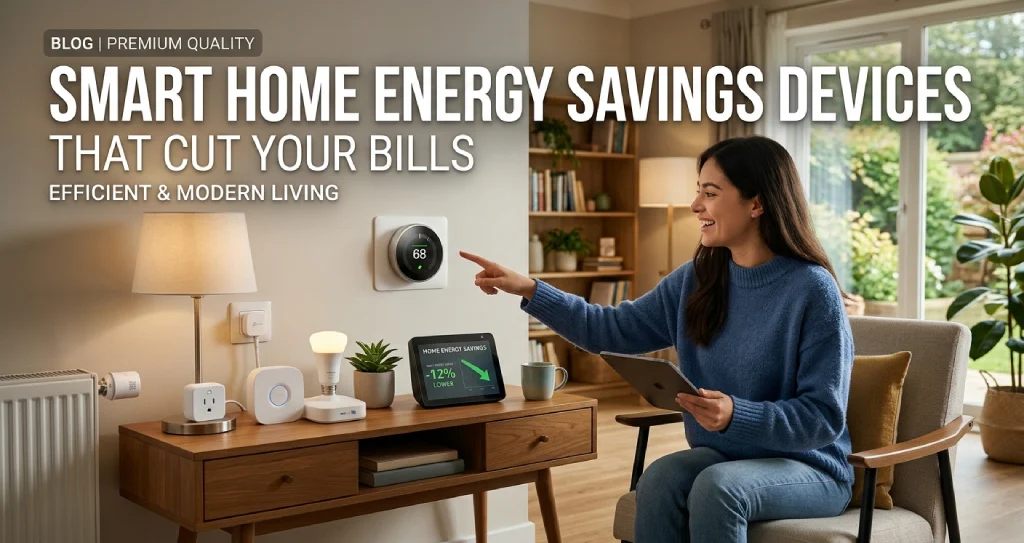
A thermostat tackles the biggest cost first ENERGY STAR certified models save about 8 percent on heating and cooling each year They learn your schedule and adjust when you leave.
As a result you stop cooling an empty house You can also change the temperature from your phone Learn more about ENERGY STAR certified smart thermostats and check for local rebates.
Smart Plugs And Power Strips
Plugs cut power to idle gear You can switch them off by schedule or with a tap Good targets include TVs game consoles and chargers.
Power strips do the same for a group of devices Therefore one strip can cover your whole entertainment setup They also cost very little.
Smart LED Bulbs
Lighting adds up over a year LED smart bulbs use at least 75 percent less energy than old incandescent bulbs They also last far longer.
You can dim them or turn them off remotely For example schedule the hallway lights to switch off at night That small habit saves energy daily.
Energy Monitors
You cannot fix what you cannot see A monitor shows which appliances use the most power Once you see the numbers smarter choices follow.
Smart Water Heaters
Water heating takes a lot of energy Smart models heat water only when you need it That cuts standby losses However they cost more upfront than the other devices here.
How Much Smart Home Energy Savings Are Realistic?
Be careful with big claims online Some sites promise 30 percent off your bill Real results depend on your home, climate, and habits.
The thermostat usually saves the most One estimate says it pays for itself in one to five years Plugs cost much less and can pay off within a year.
Those figures come from one estimate so treat them as a guide Track your bills before and after you install a device That way you see your own results.
How To Choose Devices For Smart Home Energy Savings
Start with your biggest cost If heating or cooling dominates begin with a thermostat If your living room has many gadgets try a smart power strip first.
Next check for certification Look for ENERGY STAR-rated products Also confirm that each device works with your phone and voice assistant Finally avoid products that need a paid plan for basic features.
Mistakes That Hurt Smart Home Energy Savings
Smart devices can backfire For example do not put a plug on a fridge or freezer Those appliances need constant power.
Another common mistake is skipping the basics. Smart gadgets cannot fix a leaky window or poor insulation Fix those first then add tech on top.
Finally do not buy everything at once Add one device watch your bill and then decide what comes next.
Final Thoughts On Smart Home Energy Savings
Smart home energy savings come from a few well-chosen devices not a pile of gadgets A thermostat a few smart plugs and LED bulbs cover most homes Overall start small, track your bills, and keep what works.
So pick one device this week and install it After all the easiest savings are the ones that run on their own.