Everyone wants better sleep and the internet has a gadget for every problem Mouth tape trackers and supplement stacks fill social media feeds. However most of them do less than the basics.
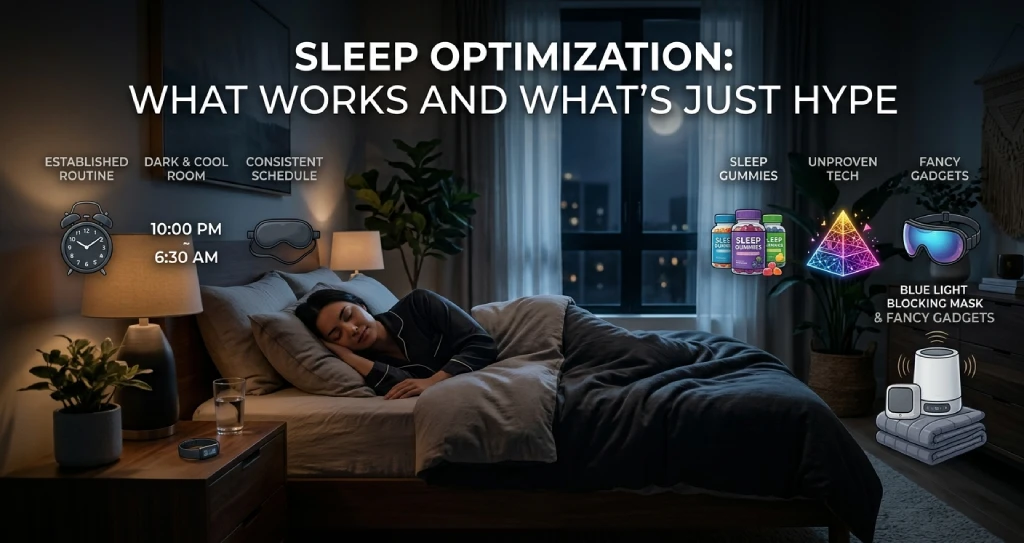
This guide sorts sleep optimization into what works and what is hype You will get simple habits to try tonight.
What Sleep Optimization Really Means
Online this trend often goes by “sleepmaxxing.” It combines supplements wearable trackers temperature control light routines mouth tape and weighted blankets That sounds like a lot of work.
In fact the best results usually come from simple habits The strongest support is for a consistent schedule morning light exercise and CBT-I.
What Actually Works
These habits have the best evidence They also cost almost nothing.
A Consistent Schedule
Keep the same sleep and wake times every day That includes weekends One large study linked irregular sleep timing to heart problems even when total sleep stayed the same.
Therefore a steady wake time is your best first step It anchors your body clock so sleepiness arrives on time at night.
Morning Light
Get outside soon after you wake up Bright light in the first hour helps set your body clock and supports better sleep that night Even a short walk counts.
Smart Caffeine Timing
Caffeine lasts longer than most people think Its half-life is roughly five to six hours In one controlled study 400 mg six hours before bed cut total sleep time.
As a result many experts suggest an early-afternoon cutoff Cutting off caffeine by early afternoon is well supported.
A Cool, Dark Room
Sleep doctors back a cool, dark room, with temperatures around 60 to 68 degrees Fahrenheit Blackout curtains and a fan help Moreover skip alcohol close to bedtime since it can fragment your sleep.
A Calm Wind-Down
Screens can delay sleep In one study reading on a light-emitting e-reader before bed reduced melatonin and delayed the body clock So dim the lights and put the phone down about an hour before bed.
Sleep Optimization Hype You Can Skip
Some popular tricks have weak evidence A few carry real risks.
Mouth Taping
This trend draws the sharpest warnings A 2025 review found no evidence that mouth taping improves sleep or breathing It can also be risky for people with nasal blockage heavy snoring or possible sleep apnea Therefore talk to a clinician before you try it.
Sleep Trackers
Trackers can show trends However they are not medical tools Clinicians worry that obsessive tracking can fuel sleep anxiety If a score stresses you out take a break from it.
Supplements And Melatonin
Melatonin acts as a timing signal not a sleeping pill It helps most with jet lag or a shifted schedule Magnesium may help modestly However be careful with sleep supplement stacks Check with your doctor first.
A Simple Starting Plan
You do not need to change everything at once Pick two habits for the first week For example fix your wake time and get morning light.
Next add a caffeine cutoff and a cooler room Finally build a short wind-down routin Small steps stick better than big overhauls.
When To See A Doctor
Habits cannot fix everything See a doctor if you struggle to sleep for weeks Do the same if you snore loudly gasp at night or feel very sleepy all day Those signs can point to a sleep disorder that needs real treatment.
Final Thoughts On Sleep Optimization
Good sleep optimization is mostly simple and steady A fixed schedule morning light smart caffeine timing and a cool dark room beat most gadgets Overall skip the risky hacks and trust the basics.
So start with one habit tonight After all better sleep rarely needs a complicated plan.